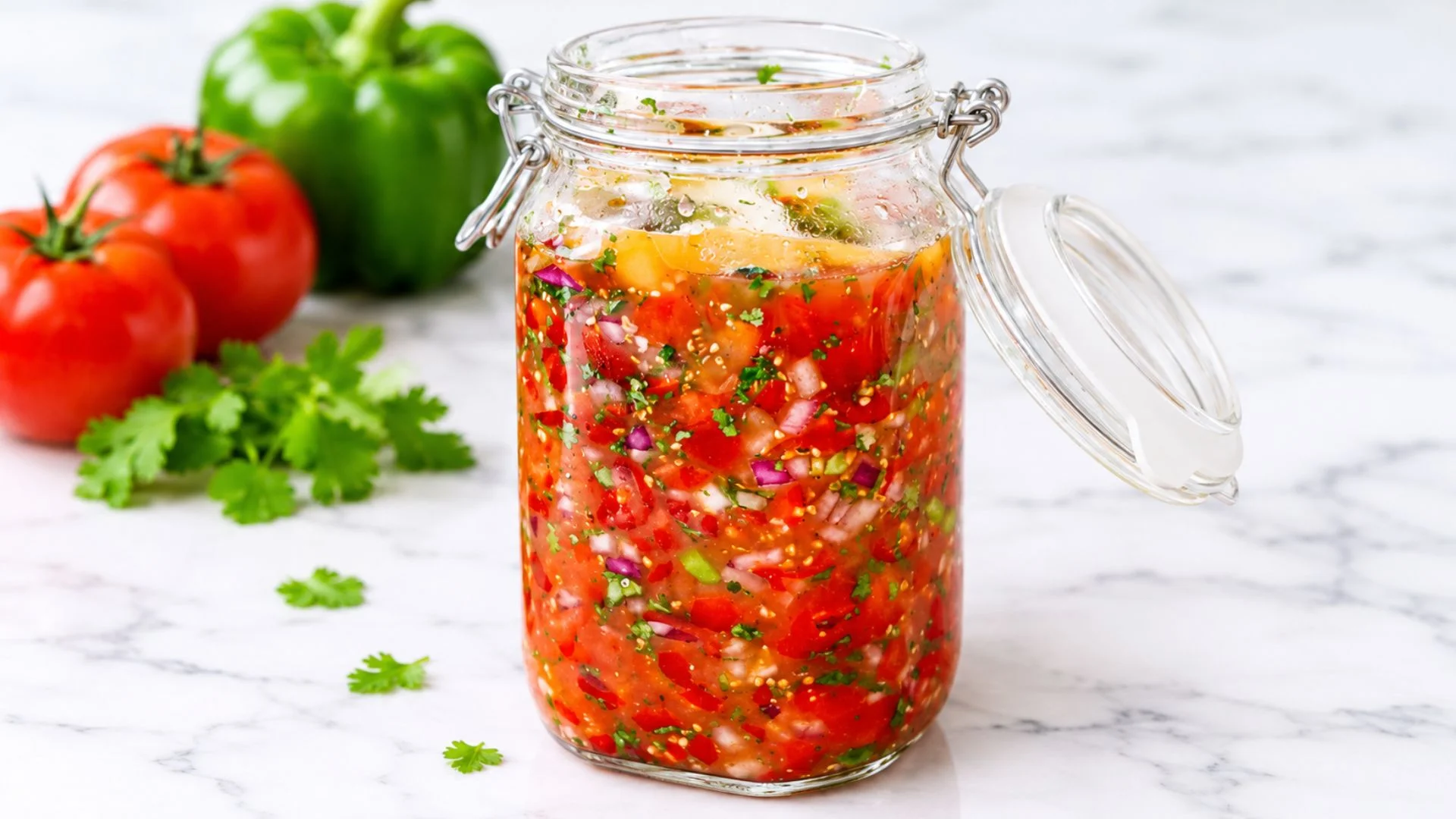
Fermented salsa recipe is a traditional fresh salsa made with tomatoes, onions, peppers, garlic, and cilantro Ripe tomatoes make the salsa juicy, while garlic, cilantro, and lime juice add a fresh, zesty flavor.
I love how the natural fermentation gives this homemade salsa a deeper tang. The fermented salsa recipe tastes great with tacos, grilled meats, rice bowls, or tortilla chips.
I’ll show you how to prepare this flavorful fermented salsa recipe at home.
About This Fermented Salsa Recipe
This fermented salsa recipe stands out for its naturally developed tangy flavor, created through the fermentation of fresh vegetables.
The main specialty is its lively sour taste, balanced by mild jalapeño heat and fresh tomato sweetness. Chopped tomatoes create a juicy, chunky base, while red onion and garlic add depth.
I enjoy how the fermentation gives this salsa a distinctive flavor that regular fresh salsa does not have. Serve it alongside tacos, grilled chicken, nachos, or homemade burritos for a flavorful addition to your meal.
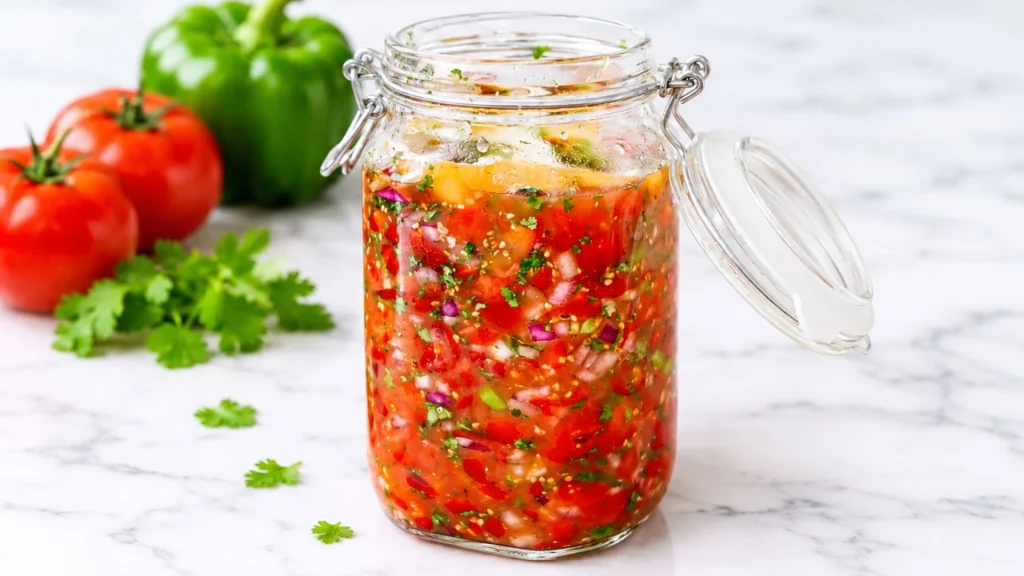
How To Prepare Fermented Salsa Recipe?
Recipe Overview
Preparation Time: 20 minutes
Cooking Time: 0 minutes
Fermentation Time: 3 days
Total Time: 3 days
Course: Condiment
Difficulty: Easy
Cuisine: Mexican Inspired
Yield: Approximately 3 cups
Servings: 14 servings
Main Kitchen Utensils
- Large mixing bowl
- Sharp kitchen knife
- Cutting board
- Glass fermentation jar with lid
- Kitchen scale
Ingredients
- 500 g ripe tomatoes, finely chopped
- 120 g red onion, finely diced
- 40 g jalapeño peppers, minced
- 15 g fresh garlic, minced
- 17 g non-iodized salt
- 15 g fresh cilantro, chopped
- 20–30 g fresh lime juice
- ½ tsp (1 g) ground cumin
- 1 medium bell pepper (approximately 150 g), quartered
Instructions
Step 1
Wash the tomatoes, bell pepper, jalapeños, cilantro, and other vegetables under running water. Finely chop the tomatoes, onion, jalapeños, garlic, and cilantro.
Step 2
Place the chopped tomatoes, red onion, jalapeños, garlic, bell pepper, and cilantro in a large mixing bowl. Give everything a good stir so the vegetables are evenly mixed.
Step 3
Add the non-iodized salt, ground cumin, and lime juice. Mix well, gently pressing the vegetables with a spoon to help draw out their natural juices.
Step 4
Transfer the mixture to a clean glass fermentation jar. Press it down firmly until the vegetables sit beneath their natural liquid, leaving about 1–2 inches of space at the top.
Step 5
Place a fermentation weight over the vegetables to keep them fully submerged. Make sure no pieces float above the liquid.
Step 6
Fit the jar with an airlock lid or suitable fermentation cover. Leave it at room temperature, ideally 65–72°F (18–22°C), away from direct sunlight.
Step 7
Let the salsa ferment for 2-3 days. Check the jar daily for bubbles and a pleasantly sour smell, making sure the vegetables stay covered with liquid.
Step 8
Once the salsa reaches your preferred tangy flavor, move it to the refrigerator to slow fermentation. Store it in a clean, airtight container and always use a clean spoon when serving.
Nutrition Facts Per Serving
| Nutrition | Amounts |
|---|---|
| Calories | 15 kcal |
| Carbohydrates | 3.2 g |
| Protein | 0.6 g |
| Fat | 0.1 g |
| Fiber | 0.8 g |
| Sugar | 1.8 g |
| Sodium | 560 mg |
What Does This Recipe Taste Like?
The fermented salsa recipe has a fresh, tangy taste with a savory touch that develops naturally during fermentation. Ripe tomatoes add a little sweetness, while red onion gives it a mild sharpness.
Jalapeños bring gentle heat, balanced by the warm flavor of cumin. Garlic adds a rich, savory taste, while cilantro and lime juice keep everything fresh and bright.
After a few days of fermentation, the Fermented Salsa Recipe develops a deeper, slightly sour flavor that makes this homemade salsa stand out.
Expert Tips
1. Use fully ripe, firm tomatoes for the best flavor and texture. Avoid overripe tomatoes because they can make the salsa too watery during fermentation.
2. Choose non-iodized salt for fermentation. I prefer kosher or pickling salt because it helps create the right salty environment for beneficial bacteria.
3. Chop the vegetables into small, even pieces so the flavors mix well. Keep the pieces similar in size for a consistent texture.
4. Keep all the vegetables completely submerged beneath the liquid during fermentation. Use a clean fermentation weight to prevent exposed pieces from developing mold.
5. Check the salsa daily after the first 2–3 days. Fermentation speed depends on room temperature, so taste it when it develops a pleasant tangy flavor, then transfer it to the refrigerator.
Serving Suggestions
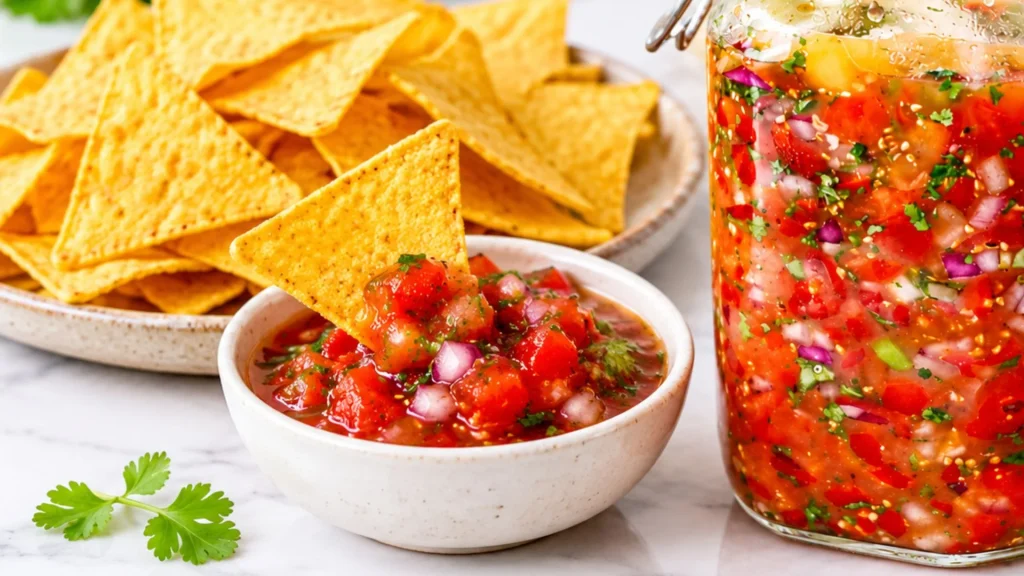
I like serving this fermented salsa with warm tortilla chips for a quick snack or appetizer. It also tastes delicious over chicken tacos, beef burritos, quesadillas, or grilled fish.
For lunch, I enjoy adding a few spoonfuls to rice bowls with black beans, avocado, and grilled vegetables. You can even serve this fermented salsa recipe with roasted potatoes or scrambled eggs for breakfast.
Keep the fermented salsa recipe refrigerated until serving to preserve its fresh texture and tangy flavor.
How To Make More Delicious?
1. Add a little roasted garlic to give the salsa a deeper, richer flavor with a mild smoky taste.
2. Mix in finely chopped red bell pepper for extra sweetness and a pleasant crunch.
3. Add a pinch of smoked paprika to bring a warm, smoky flavor that pairs nicely with the tangy tomatoes.
4. Use fresh lime juice to give the salsa a bright citrus taste and balance the salty, sour flavors.
5. Add a little extra fresh cilantro before serving for a refreshing taste that makes the salsa more flavorful.
Proper Storage
Once the fermented salsa recipe reaches your preferred tanginess, transfer it to a clean, airtight glass jar and store it in the refrigerator.
Keep the vegetables covered with their liquid to help preserve moisture and flavor. Always use a clean spoon when serving. For the best taste, enjoy your fermented salsa within 2–3 weeks.
Before eating, check for unusual odors, fuzzy mold, or discoloration. Properly storing your fermented salsa recipe helps maintain its quality, but discard it if you notice anything suspicious.
Frequently Asked Questions
Can I Use Regular Table Salt For Fermented Salsa?
Non-iodized salt, such as sea salt or pickling salt, works best. It helps create suitable conditions for vegetable fermentation.
How Do I Know When Fermented Salsa Is Ready?
Look for small bubbles, a tangy smell, and a pleasantly sour flavor. Always check for signs of spoilage before tasting.
Should Fermented Salsa Stay In The Refrigerator?
Yes. Once fermentation reaches your preferred flavor, transfer the jar to the refrigerator to slow down further fermentation.
Can I Make Fermented Salsa Without Jalapeños?
Yes. You can leave out the jalapeños or replace them with mild peppers for a less spicy flavor.
Why Does My Fermented Salsa Have Bubbles?
Bubbles are a natural result of beneficial bacteria producing carbon dioxide during fermentation. A little bubbling is normal.
Conclusion
I hope you have fun making this fermented salsa recipe. Fresh vegetables, a little jalapeño heat, and a naturally tangy taste make it a great homemade condiment.
Serve it with tacos, grilled chicken, rice bowls, or crunchy tortilla chips. I’d love to know how your salsa turns out and what you enjoy serving it with.
Save the fermented salsa recipe for another day, or share it with friends and family who love homemade salsa.
You Might Also Like
Lizano Salsa Recipe | For Everyday Meals
Korean BBQ Sauce Recipe | Quick Homemade
White Velvet Cake Recipe || Best Ever
Easy Homemade Green Tomato Salsa Recipe
Easy Spicy Habanero Salsa Recipe
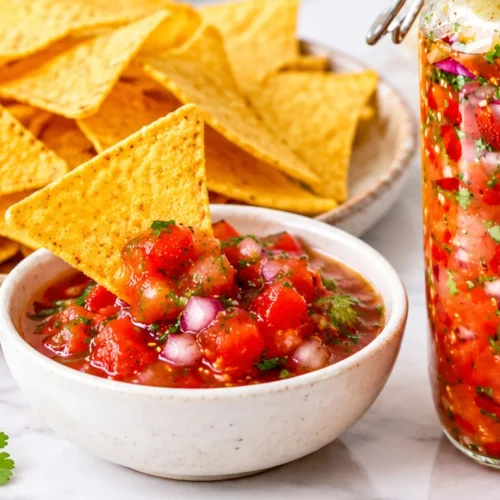
Fermented Salsa Recipe

Equipment
- Large mixing bowl
- Sharp kitchen knife
- Cutting board
- Glass fermentation jar with lid
- Kitchen scale
Ingredients
- 500 g ripe tomatoes finely chopped
- 120 g red onion finely diced
- 40 g jalapeño peppers minced
- 15 g fresh garlic minced
- 17 g non-iodized salt
- 15 g fresh cilantro chopped
- 20 –30 g fresh lime juice
- ½ tsp 1 g ground cumin
- 1 medium bell pepper approximately 150 g, quartered
Instructions
Step 1
- Wash the tomatoes, bell pepper, jalapeños, cilantro, and other vegetables under running water. Finely chop the tomatoes, onion, jalapeños, garlic, and cilantro.
Step 2
- Place the chopped tomatoes, red onion, jalapeños, garlic, bell pepper, and cilantro in a large mixing bowl. Give everything a good stir so the vegetables are evenly mixed.
Step 3
- Add the non-iodized salt, ground cumin, and lime juice. Mix well, gently pressing the vegetables with a spoon to help draw out their natural juices.
Step 4
- Transfer the mixture to a clean glass fermentation jar. Press it down firmly until the vegetables sit beneath their natural liquid, leaving about 1–2 inches of space at the top.
Step 5
- Place a fermentation weight over the vegetables to keep them fully submerged. Make sure no pieces float above the liquid.
Step 6
- Fit the jar with an airlock lid or suitable fermentation cover. Leave it at room temperature, ideally 65–72°F (18–22°C), away from direct sunlight.
Step 7
- Let the salsa ferment for 2-3 days. Check the jar daily for bubbles and a pleasantly sour smell, making sure the vegetables stay covered with liquid.
Step 8
- Once the salsa reaches your preferred tangy flavor, move it to the refrigerator to slow fermentation. Store it in a clean, airtight container and always use a clean spoon when serving.
Notes
Nutrition Facts Per Serving
Calories: 15 kcal | Carbohydrates: 3.2 g | Protein: 0.6 g | Fat: 0.1 g | Fiber: 0.8 g | Sugar: 1.8 g | Sodium: 560 mg
2 thoughts on “Best Fermented Salsa Recipe”